DNS
The Domain Name System (DNS) translates human-readable domain names into the IP addresses and services that computers use to communicate.
Domain name structure
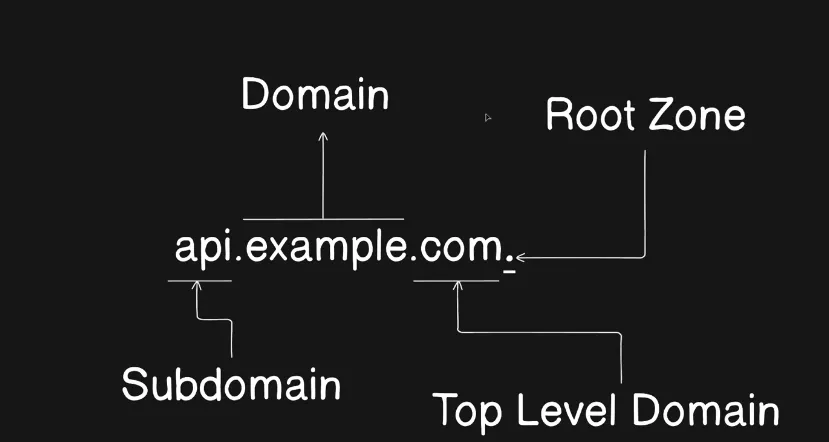
Section titled “Domain name structure”A fully qualified domain name is made from several parts. In api.example.com, api is the subdomain, example is the domain, .com is the top-level domain, and the final dot represents the DNS root zone.
Common DNS records
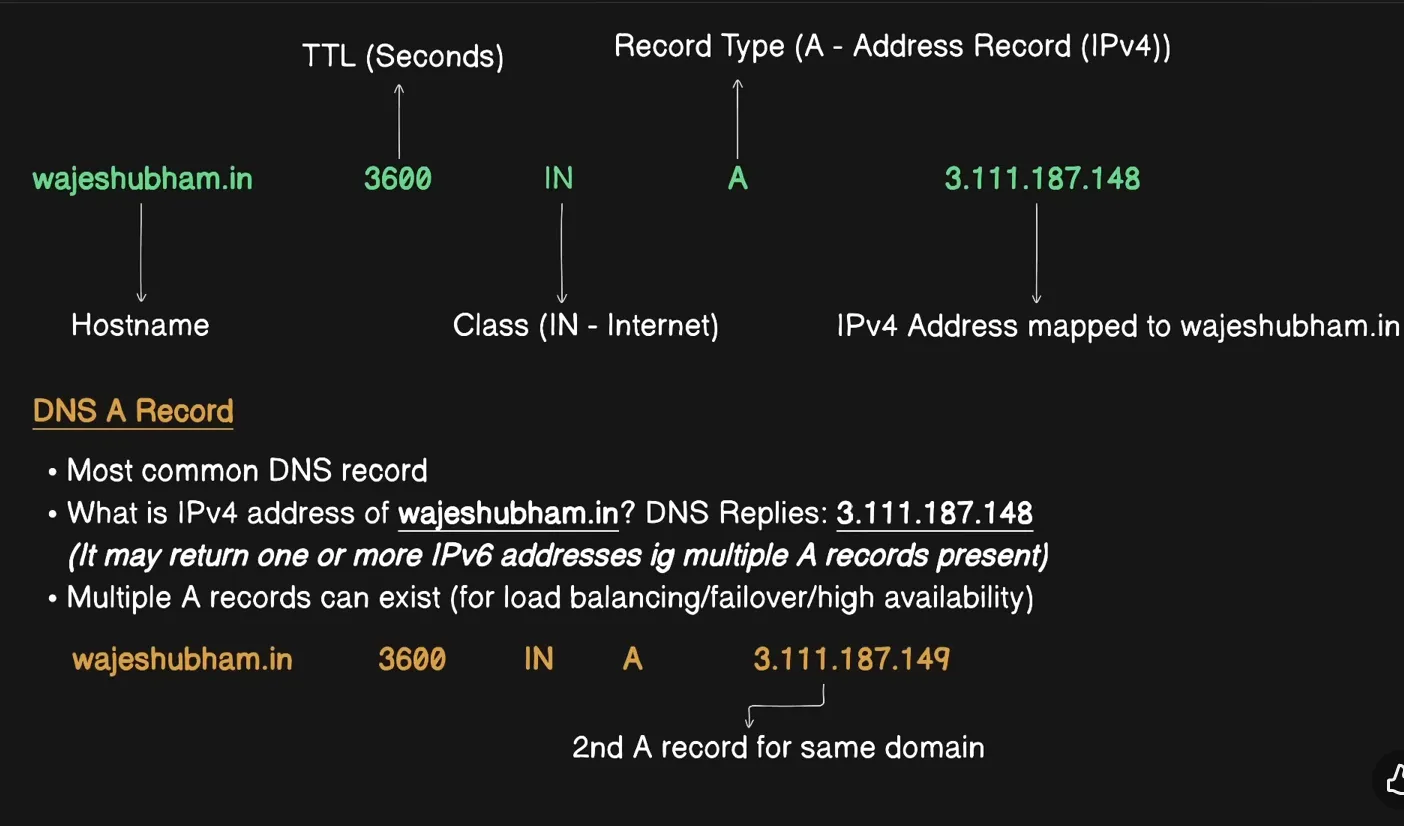
Section titled “Common DNS records”DNS records associate a hostname with an address, another hostname, or a service. The TTL controls how long resolvers may cache a record before asking for an updated value.
A records
Section titled “A records”An A record maps a hostname to an IPv4 address. Multiple A records can be used for load balancing, failover, or high availability.
AAAA records
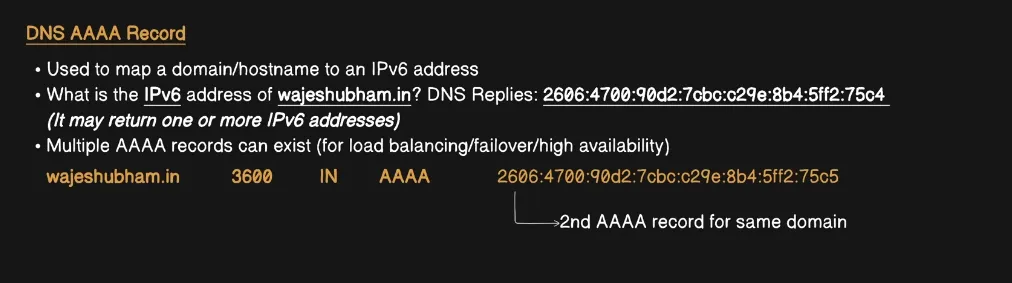
Section titled “AAAA records”An AAAA record maps a hostname to an IPv6 address. Like A records, multiple AAAA records may exist for the same hostname.
MX records
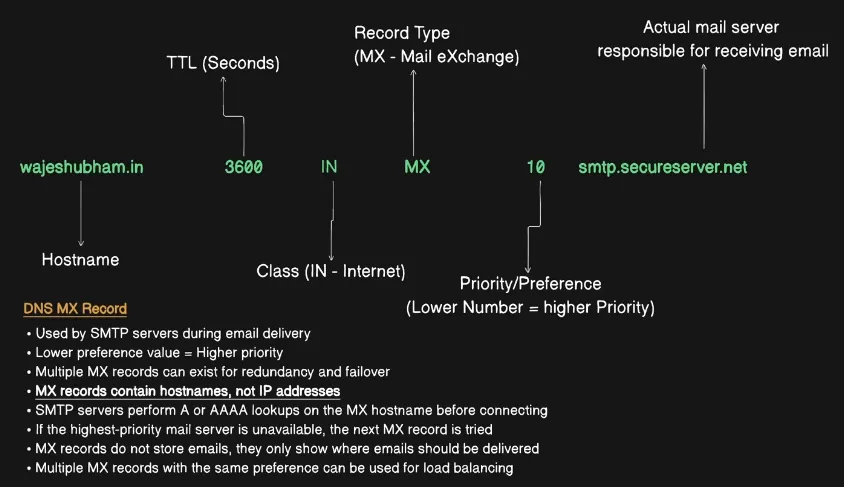
Section titled “MX records”An MX record tells mail servers where to deliver email for a domain. The preference value determines priority: lower values are tried first.
CNAME records
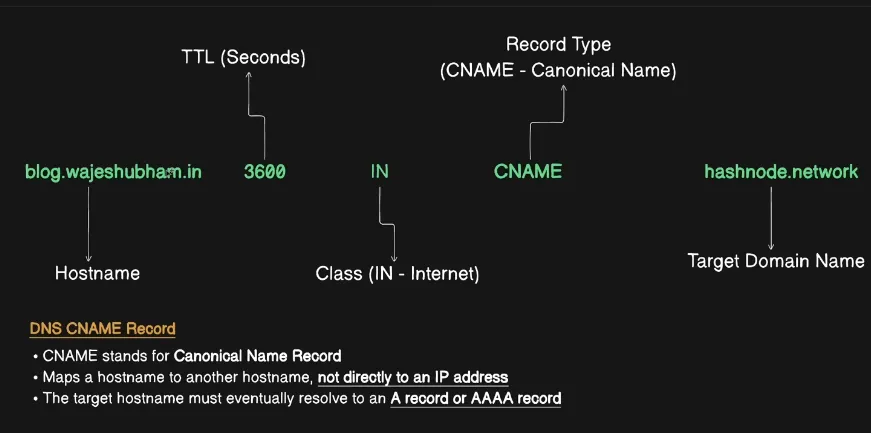
Section titled “CNAME records”A CNAME record maps one hostname to another canonical hostname. The target hostname must ultimately resolve through an A or AAAA record.
link